Home/Remodeling/Exterior Remodeling
Exterior Remodeling
Your exterior is one water management system. Fixing it out of order creates leaks.
Sequence Is The Whole Thing
Roof, siding, windows and flashing are not separate products. They are one continuous system for keeping water out and letting anything that gets in drain back out. Every layer laps over the one below it so gravity carries water outward. Get the order wrong and you have built a funnel.
Wall to roof transitions have to be built while both the roof and the siding are open. A missing kick-out flashing at that intersection dumps concentrated roof water straight into the wall, and it is one of the most common causes of rotted sheathing we find in DFW. If your siding contractor and roofing contractor are different companies, nobody owns that detail.
Rot Behind The Siding
Once siding comes off we frequently find sheathing damage, almost always traceable to a specific detail: a missing kick-out flashing, a window that was never flashed, or a deck ledger bolted through unflashed siding. We photograph it, show you, and write a change order before proceeding. New siding over rot buys you two years and a bigger bill.
Permits, HOAs And Local Rules
Exterior work is the visible kind, so two approvals usually apply. Cities across the Metroplex run their own permit and inspection process, and what needs a permit in one suburb is handled over the counter in the next. We pull what the city requires and schedule the inspections rather than hoping nobody notices.
The second one is the HOA. Across much of the northern suburbs an architectural committee has to approve siding color, trim, window style, fence material and sometimes the height of the fence. That review runs on its own calendar. We start it early, because material ordered before approval is material you may own twice.
Sun exposure drives the rest. West and south elevations here take the punishment, so those are where paint, caulk and trim fail first, and where we look before anything else.
Fencing
We build wood and vinyl privacy fence, and clay soil decides how it is done. Posts go deep enough to sit below most of the seasonal movement, in concrete footings sized for the post, with the concrete crowned so water runs off instead of standing at the post. A shallow post in this soil leans within a couple of seasons.
A solid privacy panel is a wall the wind pushes on. North Texas gets straight line wind with almost every squall line, so post spacing, post size and rail count are what keep a fence standing. We would rather add a post than replace a section.
Gates are where fences fail first. Ours get diagonal bracing or a steel frame, heavy hinges sized to the leaf, and a latch that still lines up after the ground moves. We also do concrete flatwork, so walks, small slabs and pads go on the same contract.
Job Photos
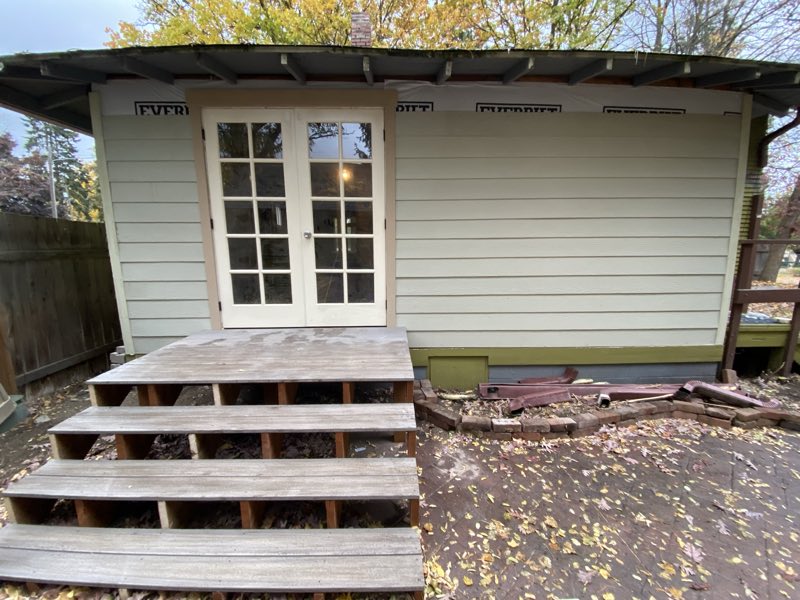
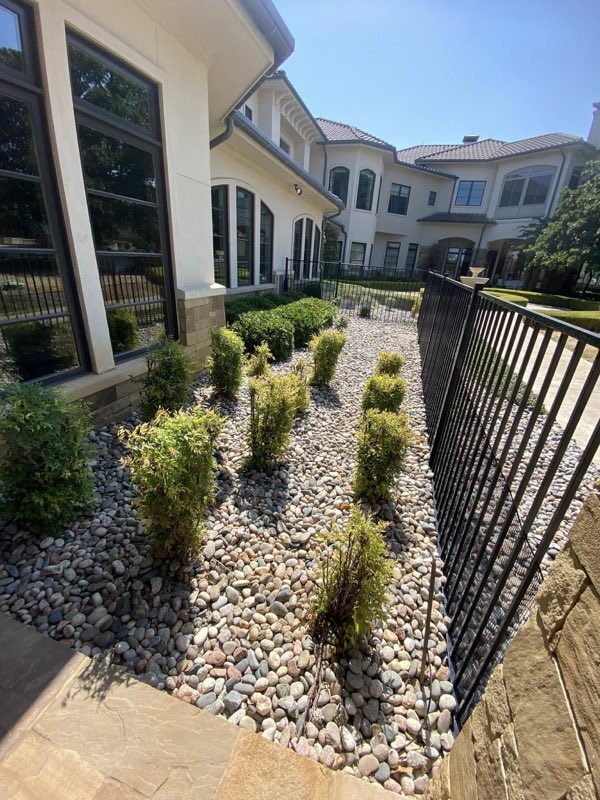
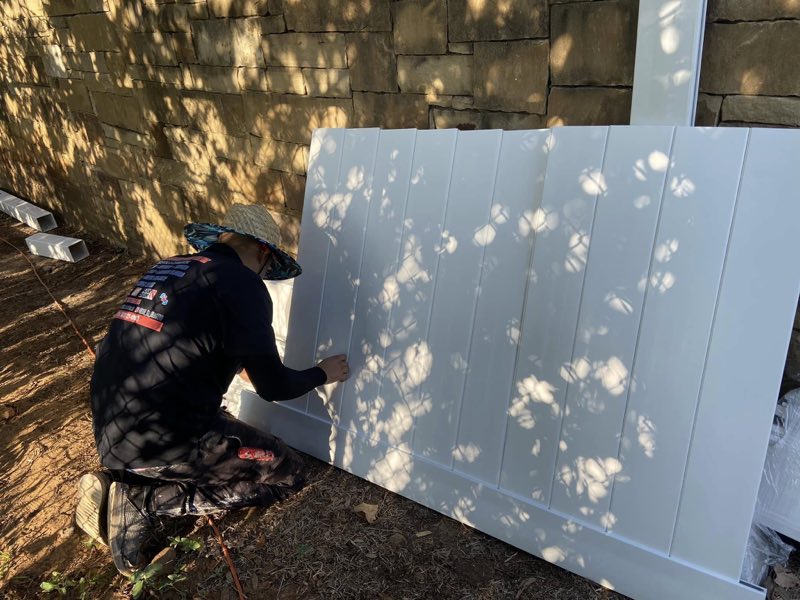
Our own work on Dallas-Fort Worth houses.
Questions
Roof or siding first?
What is a kick-out flashing?
Get it looked at before it gets expensive
Call and you get someone who has been on a roof, not a call center.